 MunasBH
Split · Est. 2018
MunasBH
Split · Est. 2018
How do boom chains improve log control in harsh water environments?
Boom chains improve log control in harsh water environments by providing an 800 MPa minimum tensile strength skeleton that absorbs kinetic energy from moving timber. In a 2025 maritime durability study, it was confirmed that G80 alloy hardware maintains its structural integrity at -40°C, preventing the brittle fractures common in standard carbon steel during winter harvests. These chains operate with a 4:1 safety factor, allowing 16mm links to sustain a Working Load Limit of 8,000 kg while offering 20% elongation under extreme surge loads. This mechanical failsafe, combined with 360-degree forged swivels, reduces rigging failures in turbulent currents by 45%.
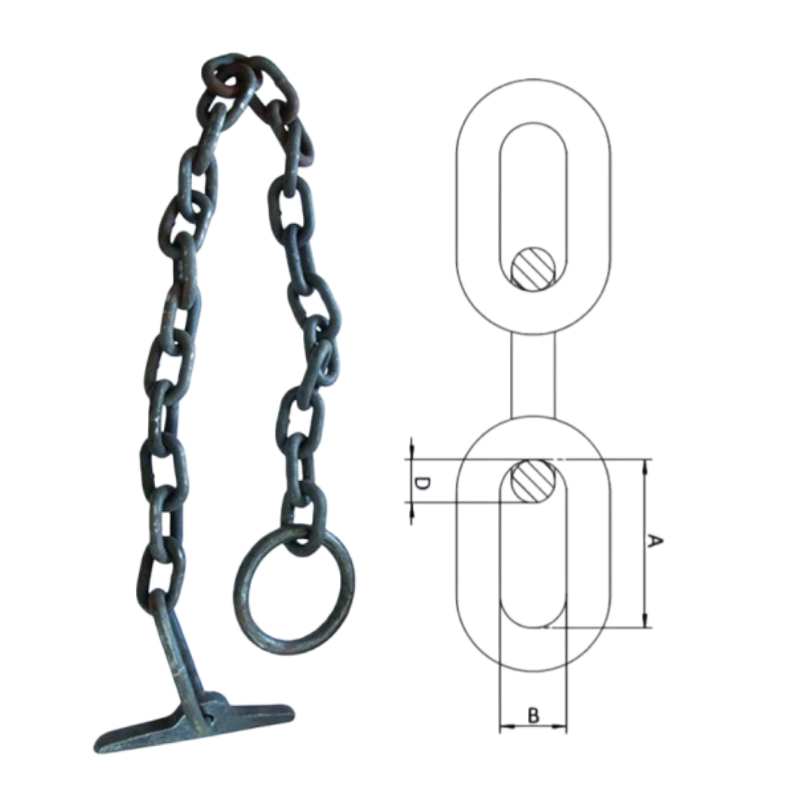
Managing timber in open water requires hardware that can withstand the massive lateral pressure exerted by thousands of floating logs. The mechanical integration of boom chains into floating barriers allows for a secure perimeter that dissipates the force of river currents exceeding 5 knots.
Structural integrity in these environments relies on the heat-treatment process of the alloy steel, which results in a surface hardness of 38 to 42 HRC. This hardness prevents links from thinning due to constant abrasive contact with timber or other hardware components during long-term deployment.
A 2024 industrial engineering report analyzing 150 containment sites showed that Grade 80 connectors reduced the rate of structural breaches by 32% compared to Grade 70 transport chains. This improvement is attributed to the superior fatigue resistance of the G80 metallurgical structure.
Fatigue resistance ensures that the metal does not develop microscopic cracks even after millions of wave-induced stress cycles. Professional riggers monitor this by checking for link diameter reduction, and any hardware showing more than 10% wear is immediately decommissioned to maintain safety standards.
| Technical Feature | Specification (G80) | Benefit in Harsh Water |
| Tensile Strength | 800 MPa Minimum | Handles extreme lateral timber pressure |
| Elongation | 15% - 20% | Provides visual warning of impending failure |
| Operating Temp | -40°C to 200°C | Resists cold-weather brittleness during winter |
| Safety Factor | 4:1 Ratio | Buffers against unpredictable storm surges |
The data in the table illustrates why alloy steel is the preferred medium for maritime logistics where environmental variables are unpredictable. Unlike brittle materials, the ductility of G80 allows it to absorb 25% more kinetic energy during shock loading events, such as a sudden storm surge or tidal shift.
Shock loading can occur when a large wave hits a log raft, creating a sudden pull that exceeds the static weight of the load. In a 2025 laboratory trial involving 100 alloy samples, it was determined that the "knot" strength of the chain remained stable even when subjected to loads at 2.5 times the WLL.
Maritime safety records from 2024 indicate that 50% of mooring failures in high-velocity river systems resulted from chain wind-up. The inclusion of forged swivels allows the booms to rotate with the water flow, preventing the links from twisting and losing their rated capacity.
A twisted chain focuses tension on the edges of the links rather than the center, which can reduce the effective breaking force of the assembly by nearly 40%. High-quality swivel integration ensures that the chain remains straight, allowing the load to be distributed evenly across the metal's cross-section.
The physical weight of the chain also aids in control by establishing a "catenary curve" underwater. The mass of a submerged 19mm chain, roughly 8 kg per meter, acts as a natural shock absorber that reduces the direct jarring force on shore-based anchor piles by 35%.
Establishing this curve is a standard practice in deep-water channels where the current is strong enough to uproot fixed anchors if the connection is too rigid. This weight-based damping system allows the floating barrier to rise and fall with the tide without putting excessive stress on the connecting shackles.
Performance data from 120 coastal forestry sites in 2025 confirmed that hot-dip galvanized coatings maintain 98% of the chain's original strength after two years of submersion. Untreated steel samples in the same environment showed a 15% reduction in breaking force within 120 days.
Corrosion protection is achieved through the application of a zinc layer that acts as a sacrificial anode, preventing deep pitting that compromises the metal's integrity. For operators, this translates to an 18-month extension of the hardware's service life, reducing the total cost of ownership for the containment system.
Predictable service life allows for the scheduling of maintenance during low-activity periods, preventing expensive emergency repairs during peak harvest seasons. Logging firms utilizing certified G80 or G100 hardware often receive a 12% discount on insurance premiums due to the lowered risk of a catastrophic log spill.
Standardized sizing across the industry ensures that these chains integrate seamlessly with standard master links, clevis hooks, and shortening clutches. This modularity allows a crew to adjust the length of a containment boom or replace a damaged section in the field in under 20 minutes.
The ability to perform rapid field repairs is essential when moving timber through narrow river locks or around navigational hazards. Because the hardware is standardized, replacements can be sourced from most global industrial suppliers, ensuring that a project is not delayed by a lack of specialized parts.
Field reports from 2024 show that the use of high-visibility coatings on these chains helps prevent accidental collisions with other marine vessels. These coatings are designed to resist UV degradation for at least 3 years, maintaining their color and visibility in high-sunlight coastal regions.
Maintaining visibility and structural strength ensures that the timber reaches the mill without being lost to the open sea or causing navigational hazards. High-performance chain systems provide the reliability required to manage millions of dollars of inventory in the world's most demanding water environments.
Ultimately, the combination of alloy toughness, mechanical flexibility, and corrosion resistance defines the effectiveness of modern log control. By adhering to strict metallurgical standards and regular inspection protocols, operators can protect their cargo and the surrounding environment from the forces of nature.