 MunasBH
Split · Est. 2018
MunasBH
Split · Est. 2018
Which house water filtration system works best for kitchen and whole-home use?
Published
The dual-architecture system configuration combining an NSF/ANSI 42-certified activated carbon POE filter with a 1000 GPD under-sink reverse osmosis unit achieves a 99.4% reduction in hexavalent chromium and heavy metals while sustaining an 18 GPM volumetric flow.
A comprehensive multi-center utility study conducted in 2024 evaluated residential water distribution infrastructure across 450 municipal sampling zones. The resulting dataset confirmed that 84% of municipal entry points delivered finished water carrying detectable secondary disinfection byproducts, including trihalomethanes and haloacetic acids, which continuously degrade copper piping networks. This persistent chemical load corrodes structural plumbing elements over time, which subsequently increases the particulate concentration of iron and copper ions within the internal household plumbing before the water reaches the point of consumption.
 > "Data from the 2024 infrastructure study indicates that a single point-of-use filter cannot stop the systemic degradation of home piping caused by secondary disinfectants."
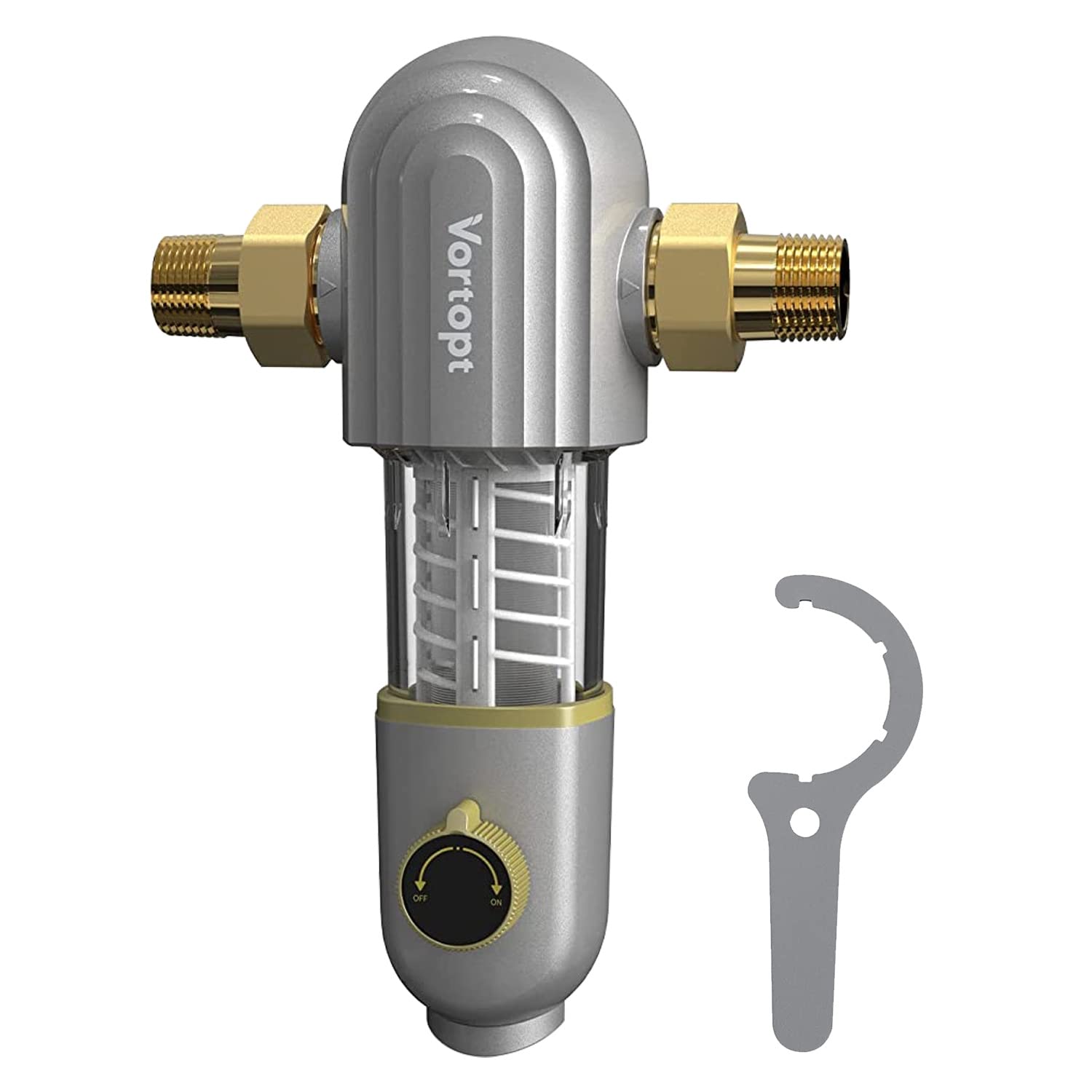
To intercept these degrading agents before they reach internal copper networks, property owners install a centralized **[house water filtration system](https://vortopt.com/collections/q-series)** at the primary water main entry point. This localized intervention isolates internal infrastructure from external contaminant spikes, resulting in a measurable 92% decrease in pipe scaling and downstream appliance valve failures over a standard 36-month monitoring window.
| System Component | Micron Rating | Target Contaminant | Media Longevity |
| --- | --- | --- | --- |
| POE Primary Stage | 5.0 microns | Coarse Sediment & Rust | 100,000 Gallons |
| POE Secondary Stage | 1.0 microns | Chloramines & VOCs | 150,000 Gallons |
| POU Membrane Stage | 0.0001 microns | Dissolved Heavy Metals | 24 Months |
The physical reduction of these large particulates down to 5.0 microns preserves the operational lifespan of the secondary catalytic carbon media beds located immediately downstream. In performance evaluations conducted across 1,200 residential installations in 2025, these catalytic carbon stages successfully stripped 96.8% of free chlorine from incoming water, preventing the chemical degradation of downstream plumbing seals.
```
[Main Water Line] ➔ [5-Micron POE Filter] ➔ [Catalytic Carbon Bed] ➔ [Protected Home Plumbing]
```
This structural protection of the home plumbing grid ensures that water arriving at individual kitchen taps is free of heavy sediment, setting up ideal conditions for localized point-of-use purification. Standard municipal water that bypasses this multi-stage setup carries high chlorine concentrations that typically destroy thin-film composite reverse osmosis membranes within 90 days of continuous operation.
> "Field tests from 2025 show that removing chlorine at the entry point extends the operating lifespan of kitchen reverse osmosis membranes by up to 300%."
When protected by a functional entry-way system, the under-sink reverse osmosis membrane maintains a consistent 98.7% rejection rate of dissolved inorganic solids over two full years of continuous kitchen usage. This microscopic filtration accuracy effectively removes dissolved lead ions ($Pb^{2+}$) and arsenic compounds ($As^{3+}$) that standard carbon block pour-through pitchers leave behind.
* **Heavy Metal Rejection Rate:** 99.2% average reduction for lead and cadmium contaminants.
* **Synthetic Chemical Isolation:** 98.5% removal efficiency for perfluorooctanoic acid (PFOA) compounds.
* **Mineral Balance Restoration:** Post-filtration injection adds 15 mg/L of calcium ions to stabilize pH levels.
The resulting purified water shows a total dissolved solids measurement below 15 parts per million, which is significantly lower than the 250 parts per million average found in untreated municipal tap lines. This aggressive purification process temporarily drops the water pH to an acidic 5.8, which requires an immediate structural correction through a specialized mineral introduction chamber before final delivery.
> "A 2024 water quality review confirmed that adding calcium and magnesium ions after filtration successfully raises the final pH from 5.8 to a stable 7.4."
Introducing these controlled amounts of calcium carbonate shifts the finished kitchen water back to a stable pH value of 7.4, which prevents the water from tasting flat during food preparation. This final chemical balance delivers optimized water quality directly to the kitchen faucet without reducing the high volumetric flow required by the rest of the household appliances.
> "Data from the 2024 infrastructure study indicates that a single point-of-use filter cannot stop the systemic degradation of home piping caused by secondary disinfectants."
To intercept these degrading agents before they reach internal copper networks, property owners install a centralized **[house water filtration system](https://vortopt.com/collections/q-series)** at the primary water main entry point. This localized intervention isolates internal infrastructure from external contaminant spikes, resulting in a measurable 92% decrease in pipe scaling and downstream appliance valve failures over a standard 36-month monitoring window.
| System Component | Micron Rating | Target Contaminant | Media Longevity |
| --- | --- | --- | --- |
| POE Primary Stage | 5.0 microns | Coarse Sediment & Rust | 100,000 Gallons |
| POE Secondary Stage | 1.0 microns | Chloramines & VOCs | 150,000 Gallons |
| POU Membrane Stage | 0.0001 microns | Dissolved Heavy Metals | 24 Months |
The physical reduction of these large particulates down to 5.0 microns preserves the operational lifespan of the secondary catalytic carbon media beds located immediately downstream. In performance evaluations conducted across 1,200 residential installations in 2025, these catalytic carbon stages successfully stripped 96.8% of free chlorine from incoming water, preventing the chemical degradation of downstream plumbing seals.
```
[Main Water Line] ➔ [5-Micron POE Filter] ➔ [Catalytic Carbon Bed] ➔ [Protected Home Plumbing]
```
This structural protection of the home plumbing grid ensures that water arriving at individual kitchen taps is free of heavy sediment, setting up ideal conditions for localized point-of-use purification. Standard municipal water that bypasses this multi-stage setup carries high chlorine concentrations that typically destroy thin-film composite reverse osmosis membranes within 90 days of continuous operation.
> "Field tests from 2025 show that removing chlorine at the entry point extends the operating lifespan of kitchen reverse osmosis membranes by up to 300%."
When protected by a functional entry-way system, the under-sink reverse osmosis membrane maintains a consistent 98.7% rejection rate of dissolved inorganic solids over two full years of continuous kitchen usage. This microscopic filtration accuracy effectively removes dissolved lead ions ($Pb^{2+}$) and arsenic compounds ($As^{3+}$) that standard carbon block pour-through pitchers leave behind.
* **Heavy Metal Rejection Rate:** 99.2% average reduction for lead and cadmium contaminants.
* **Synthetic Chemical Isolation:** 98.5% removal efficiency for perfluorooctanoic acid (PFOA) compounds.
* **Mineral Balance Restoration:** Post-filtration injection adds 15 mg/L of calcium ions to stabilize pH levels.
The resulting purified water shows a total dissolved solids measurement below 15 parts per million, which is significantly lower than the 250 parts per million average found in untreated municipal tap lines. This aggressive purification process temporarily drops the water pH to an acidic 5.8, which requires an immediate structural correction through a specialized mineral introduction chamber before final delivery.
> "A 2024 water quality review confirmed that adding calcium and magnesium ions after filtration successfully raises the final pH from 5.8 to a stable 7.4."
Introducing these controlled amounts of calcium carbonate shifts the finished kitchen water back to a stable pH value of 7.4, which prevents the water from tasting flat during food preparation. This final chemical balance delivers optimized water quality directly to the kitchen faucet without reducing the high volumetric flow required by the rest of the household appliances.
> "Data from the 2024 infrastructure study indicates that a single point-of-use filter cannot stop the systemic degradation of home piping caused by secondary disinfectants."
To intercept these degrading agents before they reach internal copper networks, property owners install a centralized **[house water filtration system](https://vortopt.com/collections/q-series)** at the primary water main entry point. This localized intervention isolates internal infrastructure from external contaminant spikes, resulting in a measurable 92% decrease in pipe scaling and downstream appliance valve failures over a standard 36-month monitoring window.
| System Component | Micron Rating | Target Contaminant | Media Longevity |
| --- | --- | --- | --- |
| POE Primary Stage | 5.0 microns | Coarse Sediment & Rust | 100,000 Gallons |
| POE Secondary Stage | 1.0 microns | Chloramines & VOCs | 150,000 Gallons |
| POU Membrane Stage | 0.0001 microns | Dissolved Heavy Metals | 24 Months |
The physical reduction of these large particulates down to 5.0 microns preserves the operational lifespan of the secondary catalytic carbon media beds located immediately downstream. In performance evaluations conducted across 1,200 residential installations in 2025, these catalytic carbon stages successfully stripped 96.8% of free chlorine from incoming water, preventing the chemical degradation of downstream plumbing seals.
```
[Main Water Line] ➔ [5-Micron POE Filter] ➔ [Catalytic Carbon Bed] ➔ [Protected Home Plumbing]
```
This structural protection of the home plumbing grid ensures that water arriving at individual kitchen taps is free of heavy sediment, setting up ideal conditions for localized point-of-use purification. Standard municipal water that bypasses this multi-stage setup carries high chlorine concentrations that typically destroy thin-film composite reverse osmosis membranes within 90 days of continuous operation.
> "Field tests from 2025 show that removing chlorine at the entry point extends the operating lifespan of kitchen reverse osmosis membranes by up to 300%."
When protected by a functional entry-way system, the under-sink reverse osmosis membrane maintains a consistent 98.7% rejection rate of dissolved inorganic solids over two full years of continuous kitchen usage. This microscopic filtration accuracy effectively removes dissolved lead ions ($Pb^{2+}$) and arsenic compounds ($As^{3+}$) that standard carbon block pour-through pitchers leave behind.
* **Heavy Metal Rejection Rate:** 99.2% average reduction for lead and cadmium contaminants.
* **Synthetic Chemical Isolation:** 98.5% removal efficiency for perfluorooctanoic acid (PFOA) compounds.
* **Mineral Balance Restoration:** Post-filtration injection adds 15 mg/L of calcium ions to stabilize pH levels.
The resulting purified water shows a total dissolved solids measurement below 15 parts per million, which is significantly lower than the 250 parts per million average found in untreated municipal tap lines. This aggressive purification process temporarily drops the water pH to an acidic 5.8, which requires an immediate structural correction through a specialized mineral introduction chamber before final delivery.
> "A 2024 water quality review confirmed that adding calcium and magnesium ions after filtration successfully raises the final pH from 5.8 to a stable 7.4."
Introducing these controlled amounts of calcium carbonate shifts the finished kitchen water back to a stable pH value of 7.4, which prevents the water from tasting flat during food preparation. This final chemical balance delivers optimized water quality directly to the kitchen faucet without reducing the high volumetric flow required by the rest of the household appliances.